
Missed Part One?
Start with:
When the Abuser Cries Victim: The Dangerous Game That Puts Real Survivors at Risk
This blog examines how false victimhood is used to manipulate systems—and the harm it causes real survivors.
When Isolated Incidents Aren’t Enough
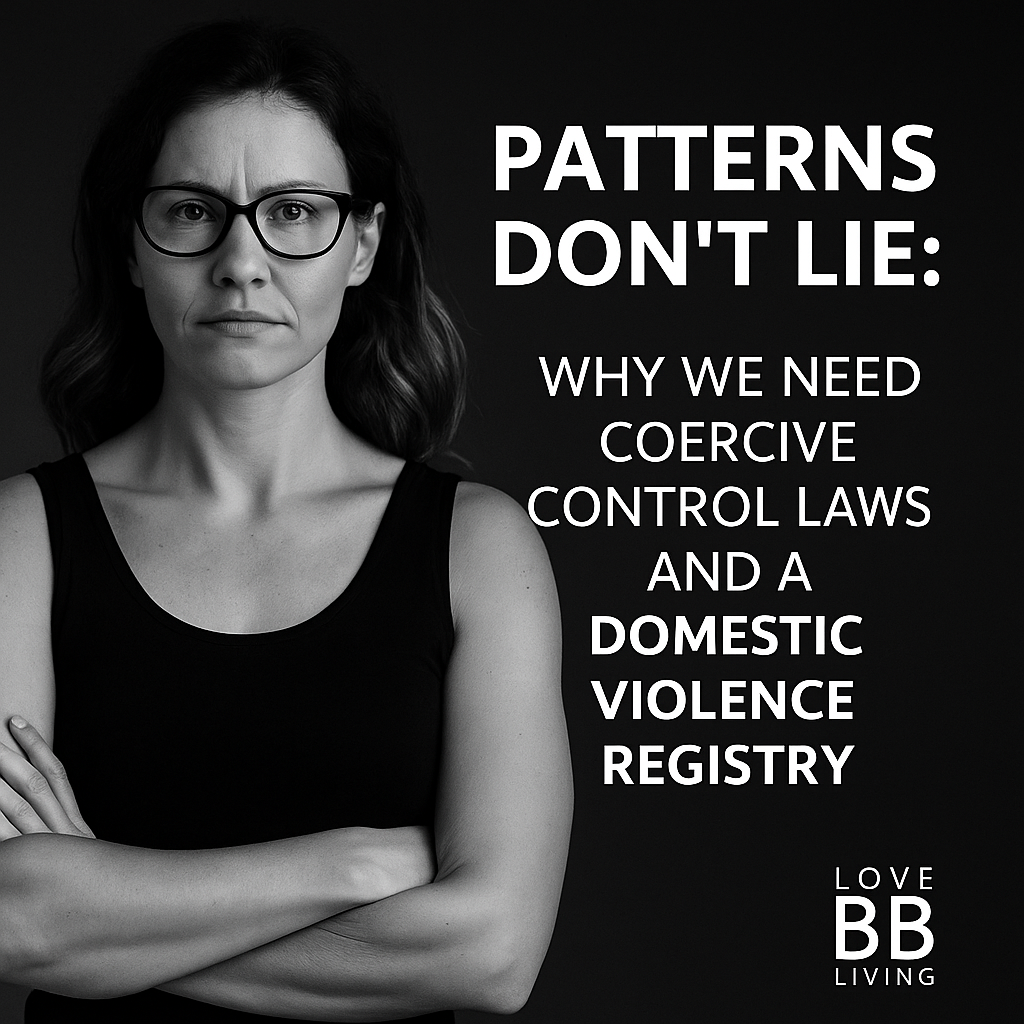
Today’s DV system often responds to snapshots—a bruise, a 911 call—but misses what unfolds over time: emotional control, financial manipulation, isolation. In Part 1, we revealed how false narratives can derail justice. This post offers the solution: tracking behavior over time, not just bruises.
What Is Coercive Control—and Why It’s So Dangerous?
Coercive control, defined by Dr. Evan Stark, describes a strategy of domination that relies on intimidation, isolation, and surveillance—not necessarily physical violence—to keep individuals trapped and fearful (Stark, 2007).
This can include:
- Withholding funds, food, or transportation
- Monitoring communications or using GPS
- Cutting off access to services or social contact
- Threats to pets or family members
- Threats of self-harm/suicide to manipulate a partner’s behavior
These tactics may not be visible—but they create lasting harm. Studies show using coercive control in risk assessments significantly improves predictive accuracy for future violence (Myhill & Hohl, 2019).
Why the Current System Fails Survivors
There is no national or statewide registry in the U.S. that connects abuse incidents across jurisdictions or partners. Each report becomes its own silo. Survivors retell trauma repeatedly, while manipulative individuals easily reintegrate with new relationships.
At the same time, those skilled at playing the victim can exploit the gaps in the justice system—and survivors pay the price.
The Case for a Domestic Violence Pattern Registry
A confidential registry—available to courts, law enforcement, and certified advocates—should track:
- Multiple protection orders or injunctions
- Verified instances of abuse or arrests
- Patterns of withdrawn complaints or non-cooperation
- Serial financial exploitation, including tactics like:
- Financial dependence via controlled allowances or restricted work
- Opening credit lines or loans in a partner’s name
- Draining bank accounts or sabotaging credit
- Cases involving older, financially stable partners targeted for resources
- Abandoning relationships once the financial benefit ends
These are recognized forms of economic abuse and are legally recognized as domestic violence in many jurisdictions (e.g., NNEDV Commitment to Economic Justice).
A registry based on documented behavior—not raw allegations—can uncover those abusive cycles early.
Where Coercive Control Laws Are Already Working
- California, Hawaii, Connecticut have passed coercive control legislation.
- In Florida, SB 844 aimed to formally criminalize coercive control—but failed in committee.
- The UK adopted such laws in 2015; Scotland, Ireland, and Australia followed shortly after (Time Magazine, 2019).
Legislation strengthens legal responses, making alternative tactics enforceable even without physical evidence.
The Stakes: How We Prevent Homicide
Survivors who are killed often exhibited warning signs—stalking, threats, financial control—but never reported obvious violence. Recognizing coercive control is a scientifically supported predictor of lethal outcomes, even when physical injuries are absent (CDC Insights on IPV Data).
Early detection and intervention can save lives.
What Needs to Happen Next
To protect survivors, Florida should:
- Reintroduce and pass SB 844
- Build a secure, agency-accessible DV Behavior Registry
- Train law enforcement and advocates to read behavior—not just incidents
- Support survivor-led public education and reform campaigns
Final Word: Patterns Reveal the Truth
Individual reports fade—but behavioral patterns persist. Systems need to recognize the long view. That’s how repeat violence is prevented—and lives are saved.
Where to Get Help
If you or someone you care about is experiencing any form of abuse, please reach out to:
- National Domestic Violence Hotline — Call 800‑799‑SAFE (7233) or text “START”
- Florida Department of Children & Families, Office of Domestic Violence, 24-Hour Hotline — 1-800-500-1119 (TTY: 1-800-621-4202) (source)
- WomensLaw.org — Free legal help and state-specific guides
- RAINN — Support for survivors of sexual violence
Disclaimer
This article addresses broad behavioral trends and legislative proposals. It does not describe or accuse any specific person or case. It is intended for educational and advocacy use only—not legal advice.
Explore the Full Advocacy Series
This post is part of an ongoing advocacy series covering coercive control, pattern-based accountability, and survivor safety policies. All related posts here.